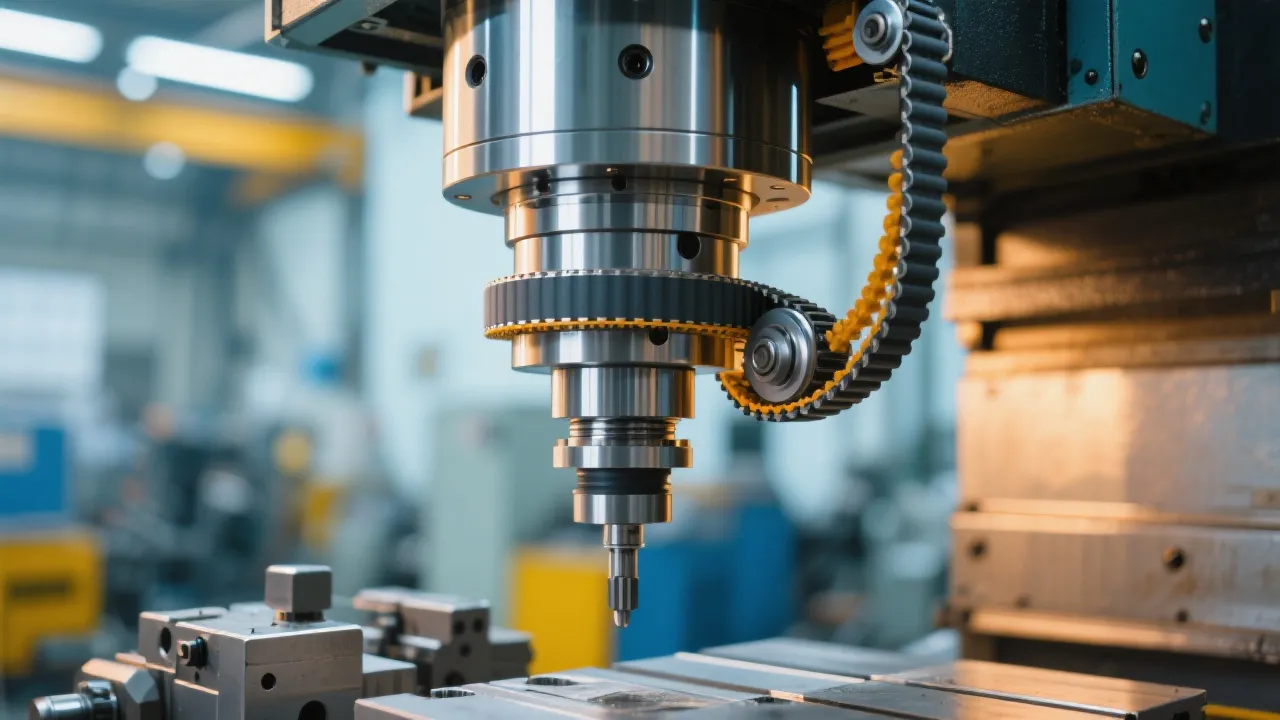
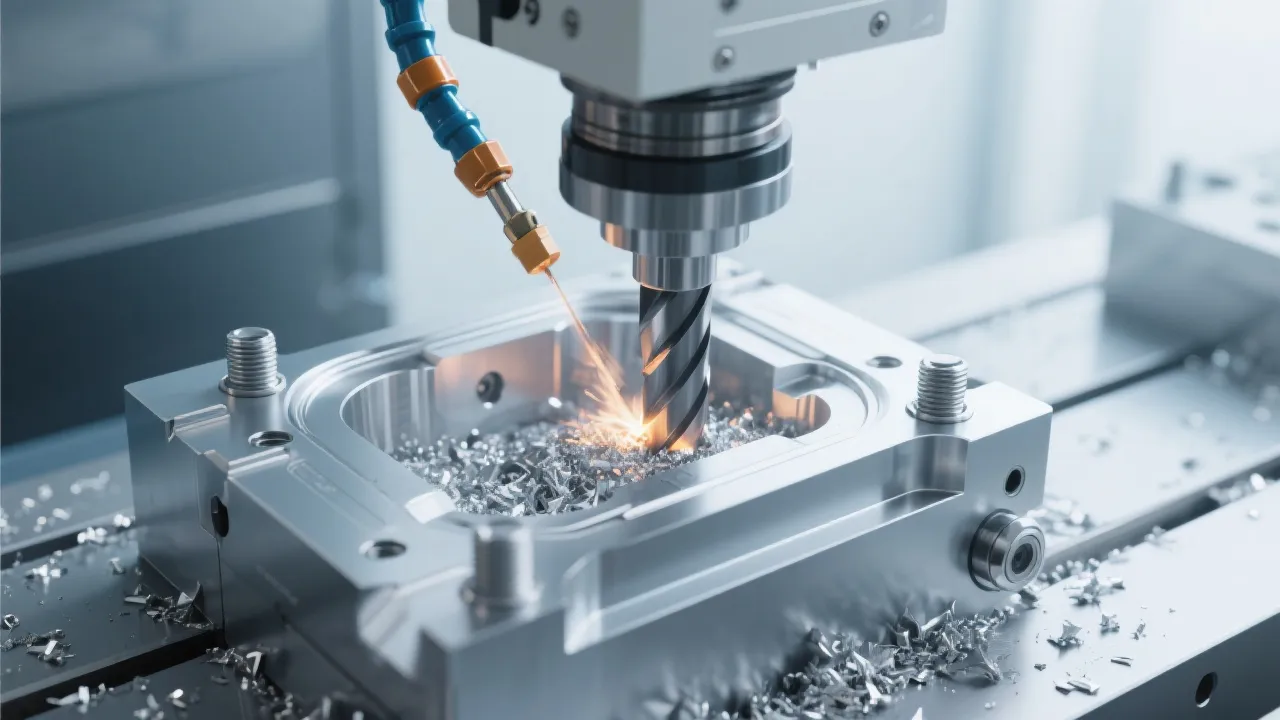
As a leading high-tech enterprise and the national standard setter for CNC engraving and milling machines, Ningbo Kaibo CNC Machinery Co., Ltd. presents this professional guide to 3/4/5 axis vertical machining centers (VMCs). With over 25 years of expertise in CNC machine tool manufacturing, we aim to clarify the fundamental concepts, structural characteristics, and practical applications of these essential manufacturing tools.
A 3-axis VMC operates along three linear axes: X (horizontal), Y (horizontal, perpendicular to X), and Z (vertical). This configuration allows cutting tools to move along these three mutually perpendicular axes relative to the fixed workpiece, enabling basic milling, drilling, and tapping operations on flat or moderately complex parts.
A 4-axis VMC adds a rotational A-axis (around the X-axis) to the standard 3-axis configuration, typically integrated into the worktable. This rotational capability allows the workpiece to be indexed or continuously rotated during machining, enabling access to multiple sides of a part in a single setup, significantly reducing setup time and improving machining accuracy for complex components.
A 5-axis VMC incorporates two additional rotational axes (typically A and C axes) to the 3 linear axes, providing full freedom of movement for either the workpiece or cutting tool. This advanced configuration enables simultaneous 5-axis machining, allowing complex contouring, undercutting, and machining of highly intricate parts from all angles without multiple setups.
| Capability | 3-Axis VMC | 4-Axis VMC | 5-Axis VMC |
|---|---|---|---|
| Setup Requirements | Multiple setups for complex parts | Reduced setups for multi-sided parts | Single setup for most complex parts |
| Machining Complexity | Simple to moderately complex parts | Complex prismatic parts | Highly complex 3D contours |
| Surface Finish | Good for simple surfaces | Improved with fewer setups | Superior with continuous tool contact |
| Production Efficiency | Efficient for simple, high-volume parts | More efficient for complex components | Highest efficiency for intricate parts |
Ningbo Kaibo CNC Machinery Co., Ltd. combines over 25 years of manufacturing experience with continuous innovation to produce high-quality 3/4/5 axis vertical machining centers. As the national standard setter for CNC engraving and milling machines, our VMCs are engineered to deliver:
Advanced motion control systems and high-rigidity structures ensure consistent machining accuracy.
Optimized spindle performance and rapid traverse rates reduce cycle times for increased throughput.
Premium components and rigorous testing ensure long-term stability and minimal downtime.
"At Ningbo Kaibo CNC, we秉承 (uphold) our宗旨 (mission) of '研发优质机床,满足客户需求' (developing high-quality machine tools to meet customer needs). Our vertical machining centers are designed to provide manufacturers with the precision, flexibility, and reliability required to compete in today's global market."
Choosing between 3, 4, or 5-axis vertical machining centers depends on several factors:
As a trusted provider of CNC machining solutions with 26 sales and service offices worldwide, Ningbo Kaibo CNC Machinery Co., Ltd. offers expert guidance to help manufacturers select the optimal vertical machining center configuration for their specific application requirements. Our team of technical specialists can provide detailed product specifications, application examples, and performance data to support your decision-making process.