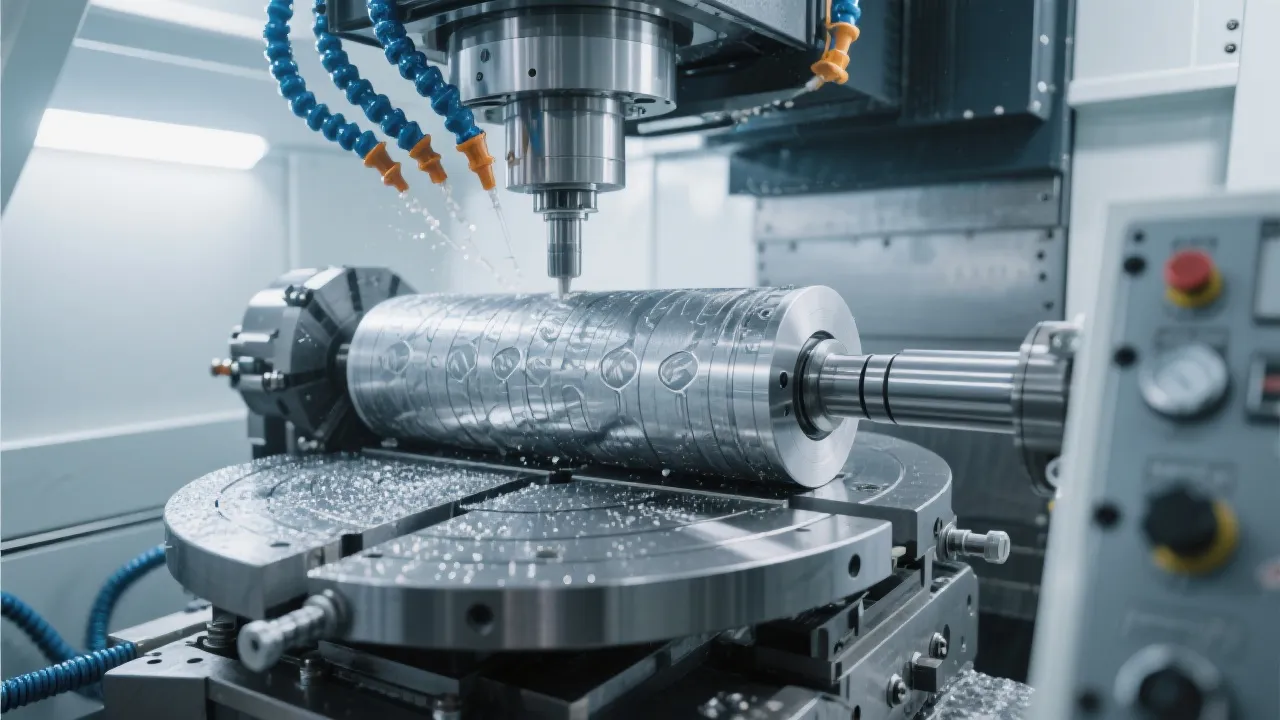
In the era of small - batch production, the efficient and accurate fixturing of workpieces is crucial for enhancing the productivity of CNC machining centers. The core pain points revolve around improving efficiency and reducing fixture change time. Statistics show that in small - batch production, fixture change can account for up to 30% of the total production time, significantly affecting overall efficiency. Moreover, inconsistent fixturing can lead to variations in product quality, which is a major concern for small and medium - sized manufacturing enterprises.
Mechanical fixtures are widely used due to their simplicity and low cost. They are suitable for workpieces with regular shapes and stable clamping requirements. For example, in the production of small metal parts, mechanical fixtures can provide reliable clamping. The typical application process involves aligning the workpiece, tightening the clamping screws, and then starting the machining process. However, mechanical fixtures may require more time for adjustment, and the clamping force needs to be carefully controlled to prevent workpiece deformation.
Pneumatic fixtures offer fast clamping and releasing functions, which greatly reduce the fixture change time. They are particularly suitable for high - volume small - batch production where speed is crucial. In a production case of automotive components, the use of pneumatic fixtures reduced the clamping time from 5 minutes to just 1 minute, improving the overall production efficiency by 40%. However, pneumatic fixtures require a stable air source and proper maintenance to ensure reliable operation.
Magnetic fixtures are ideal for ferromagnetic workpieces. They can provide uniform clamping force over the workpiece surface, which is beneficial for ensuring machining accuracy. In the production of thin - walled parts, magnetic fixtures can effectively prevent deformation. For instance, when machining thin - walled steel plates, the use of magnetic fixtures reduced the deformation rate from 8% to 2%, greatly improving the product quality.
In practical production, several tips can be applied to address common problems. When using fixtures, pre - adjusting the fixtures can save a significant amount of time. For example, preparing the fixtures before the actual production start can reduce the on - machine adjustment time. Also, proper control of the clamping force is essential. Too much clamping force can cause workpiece deformation, while too little may result in unstable clamping. For thin - walled parts, using special support structures or soft jaws can prevent deformation during clamping.
Different fixturing methods have different impacts on machining accuracy and surface quality. For example, in a case study of machining aluminum alloy parts, using mechanical fixtures had an average dimensional error of ±0.05mm, while pneumatic fixtures reduced it to ±0.02mm, and magnetic fixtures achieved an even more accurate result of ±0.01mm. These data clearly show the influence of fixturing on machining accuracy. Additionally, improper clamping can cause surface scratches or roughness, affecting the overall surface quality of the product.
| Fixture Type | Advantages | Disadvantages |
|---|---|---|
| Mechanical Fixtures | Simple, low cost, suitable for regular - shaped workpieces | Long adjustment time, difficult clamping force control |
| Pneumatic Fixtures | Fast clamping and releasing, high - efficiency | Require stable air source, high maintenance cost |
| Magnetic Fixtures | Uniform clamping force, good for thin - walled parts | Limited to ferromagnetic workpieces |
In conclusion, choosing the right fixturing method is essential for small - batch production in CNC machining centers. By understanding the characteristics, applications, and practical tips of different fixtures, small and medium - sized manufacturing enterprises can improve production efficiency, ensure product quality, and gain a competitive edge in the market.