
Ensuring the uninterrupted operation and longevity of your dual-column CNC milling machine, especially under heavy loads, hinges on following precise maintenance routines and fast fault diagnosis. As a technician managing automotive mold processing, mastering routine care such as guideway lubrication, ball screw clearance checks, and spindle temperature monitoring is indispensable to minimize downtime and maintain productivity.
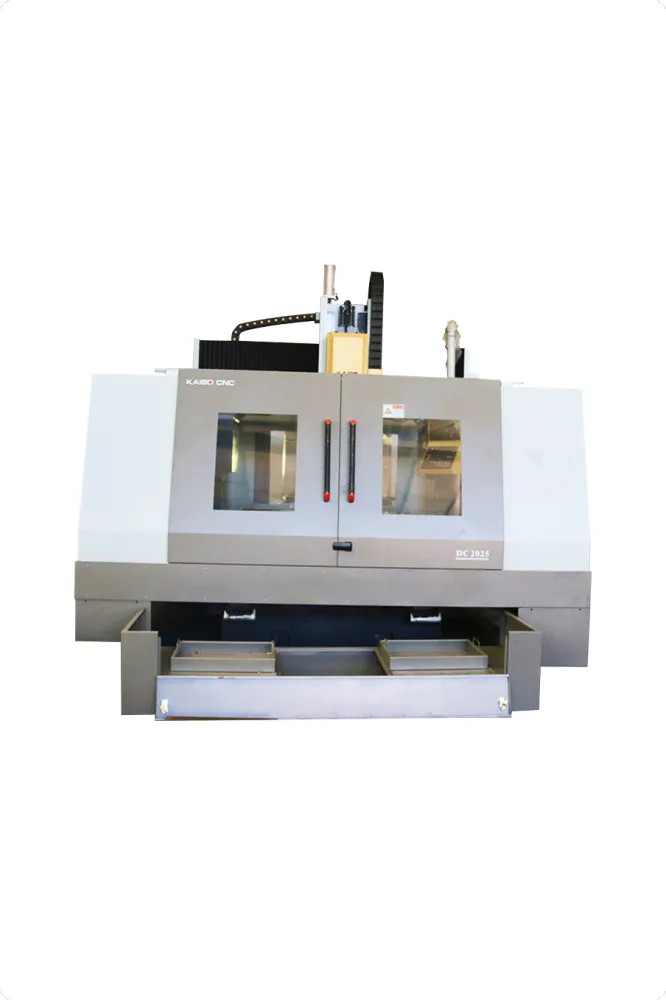
Dual-column CNC milling centers like the DC1317 model demand focused attention on several critical components due to their rigid structure and large travel distances. Regular monitoring and standardized operations help forestall common issues.
| Maintenance Item | Frequency | Standard/Notes |
|---|---|---|
| Guideway Lubrication | Weekly | Uniform grease application; use ISO VG 2 lubricant for precision sliding |
| Ball Screw Clearance Check | Monthly | Axial clearance ≤ 0.02 mm; adjust preload if exceeded |
| Spindle Temperature Monitoring | Daily during operation | Keep below 60°C; abnormal rise indicates lubrication failure or bearing wear |
| Hydraulic Pressure Check | Weekly | Maintain 120-140 bar; monitor for fluctuations linked to system leaks |
Intermittent inaccuracies and unexpected vibrations can quickly derail production. Below are fast troubleshooting protocols addressing typical symptoms seen on dual-column machines:
| Error Code | Symptom | Suggested Action |
|---|---|---|
| E101 | Positioning deviation > 0.1 mm | Check ball screw preload and encoder alignment |
| V203 | Abnormal spindle vibration detected | Inspect spindle bearings and balance; verify lubrication intervals |
| T450 | Spindle overheating (above 65°C) | Check cooling system; assess thermal protection sensors |
Have you encountered similar alarm codes or operational anomalies on your DC1317 machine? Sharing your experience with our technical support team can help tailor maintenance protocols uniquely suited to your workflow.
The large travel ranges and rigid dual-column design impart impressive machining capabilities but also increase mechanical stress under continuous heavy load.
Our refined maintenance recommendations include:
Neglecting these can escalate wear and downtime exponentially.
Tip: Consistent record-keeping of maintenance actions and fault diagnostics will help identify patterns early before problems become critical.



 <#else>





