
In today’s competitive mold manufacturing landscape, precision isn’t just a feature—it’s a requirement. Whether you're producing automotive dies or medical injection molds, even minor deviations in surface finish or dimensional accuracy can lead to costly rework or rejection by clients. That’s where high-speed CNC milling comes in.
Mold makers face increasing pressure to reduce cycle times while maintaining tight tolerances—often under ±0.01 mm. According to a 2023 industry survey by Manufacturing Engineering Journal, over 68% of mold shops report that vibration-induced errors are among their top three production challenges. This is especially true when machining complex geometries with fine features like micro-vents or textured surfaces.
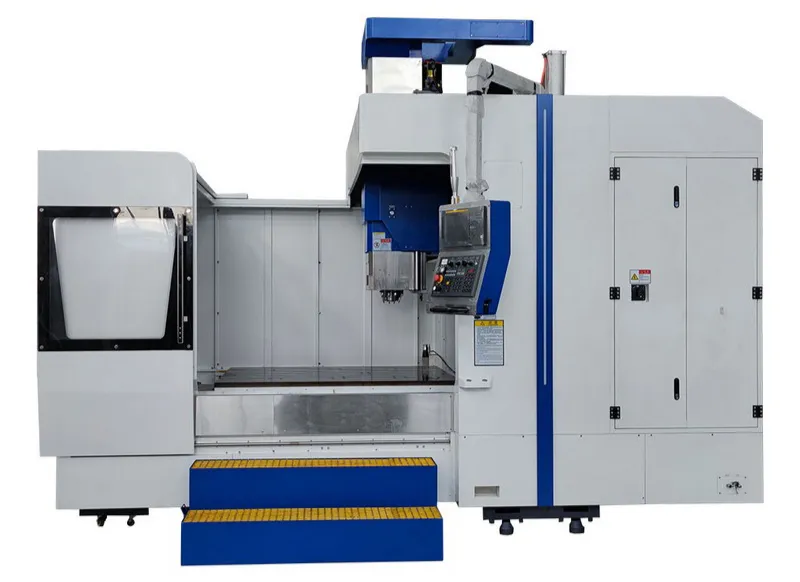
Enter the GJ8070 Dual-Column High-Speed Vertical Machining Center. Designed for mold finishing, this machine integrates multiple advanced technologies to directly address these pain points—with measurable results:
Let’s look at a case study from a mid-sized mold shop in Shenzhen. Before adopting the GJ8070, they struggled with inconsistent surface roughness on hardened steel molds—averaging Ra 3.2 μm after finishing. After optimizing spindle speed (from 8,000 rpm to 12,000 rpm) and implementing adaptive feedrate control via Fanuc’s SmartCut™ function, they achieved an average Ra of 1.2 μm across 30+ parts in one batch.
The key? Not just raw power—but intelligent integration:
| Parameter | Before GJ8070 | After Optimization |
|---|---|---|
| Spindle Speed (rpm) | 8,000 | 12,000 |
| Avg. Surface Roughness (Ra, μm) | 3.2 | 1.2 |
| Process Stability (Cpk) | 0.8 | 1.6 |
You may be asking: “Is my current setup causing similar issues?” If you’ve ever experienced unexpected size variations due to chatter or thermal expansion, it’s likely time to revisit your machining strategy.
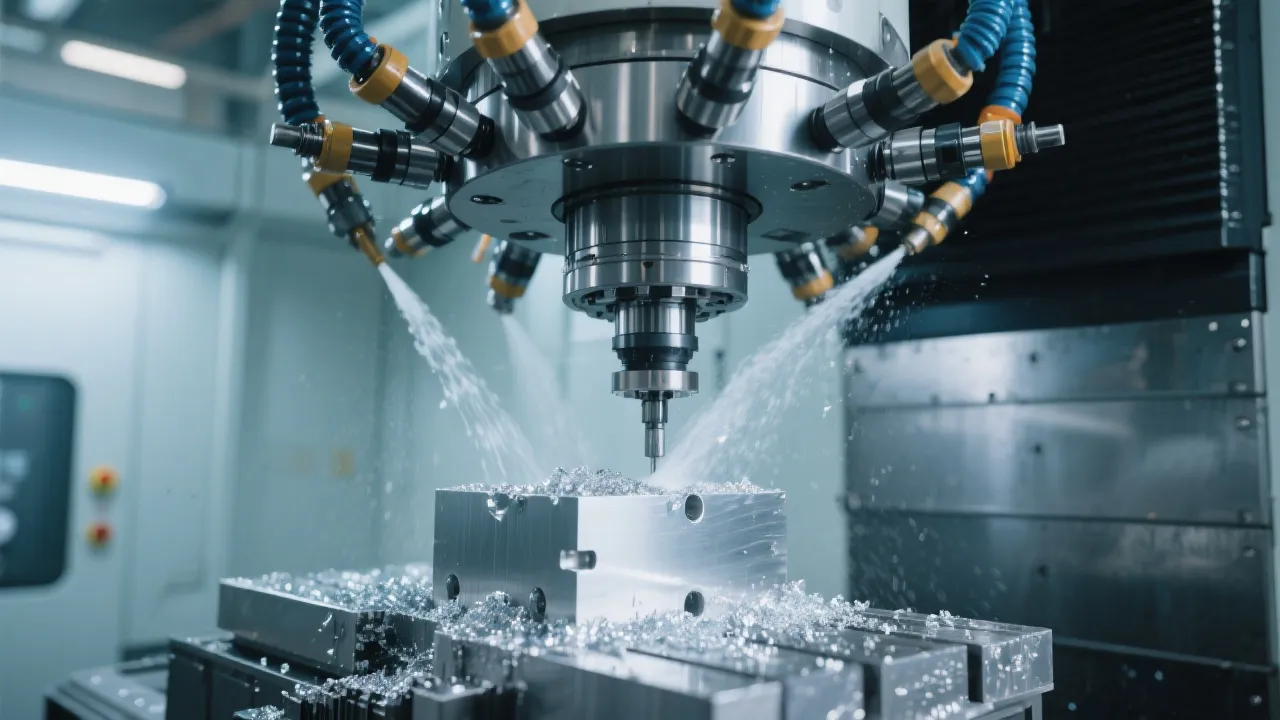
Pro Tip: Use coolant flow rate optimization (recommended: 25–30 L/min) and coated carbide inserts (e.g., TiAlN) to further enhance edge stability and prolong tool life—especially in hard materials like P20 or H13 steel.
Every GJ8070 undergoes rigorous quality checks before shipping—including 70 individual inspection steps covering mechanical alignment, thermal behavior, and vibration damping. This means less downtime, fewer rejects, and faster ramp-up for new projects.
Ready to transform your mold production?
See how the GJ8070 can help you achieve consistent, high-quality finishes—and avoid costly mistakes.
Explore the GJ8070 – Your Next Step Toward Precision







 <#else>





