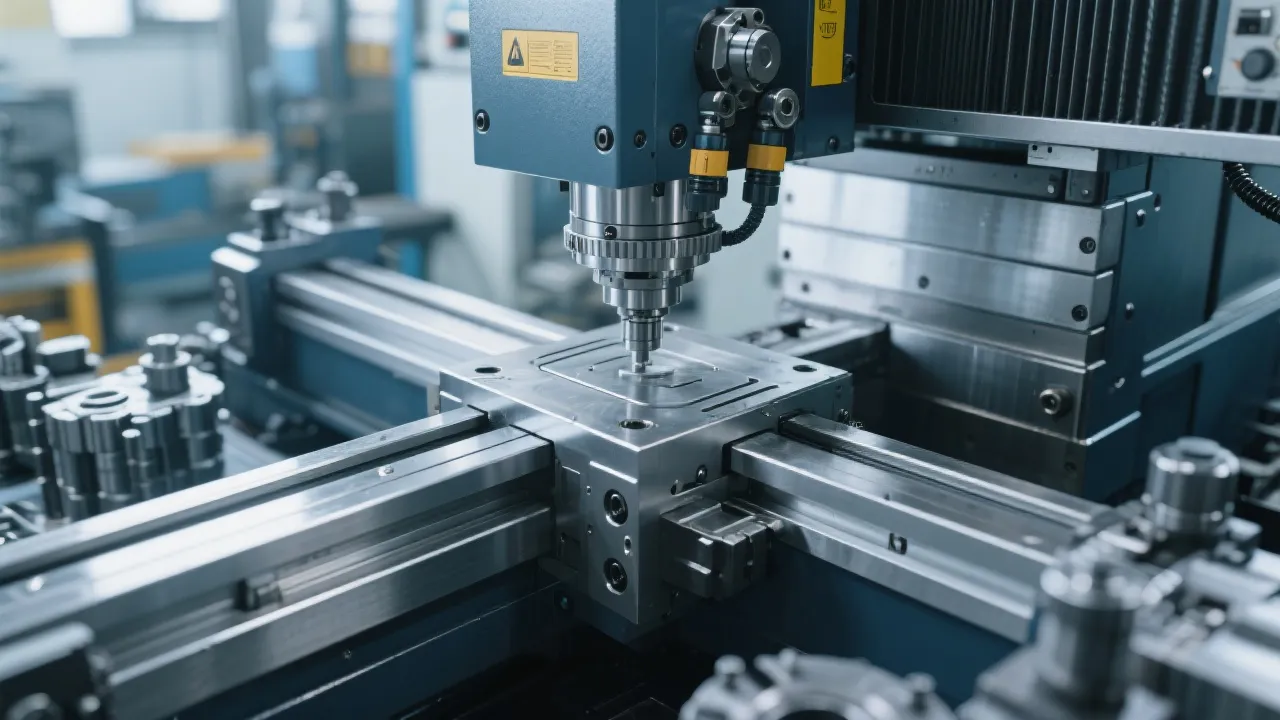
In the realm of mold manufacturing, the demand for exceptional precision and surface integrity is relentless. Achieving these standards depends heavily on selecting the right machining equipment and meticulously controlling processing parameters. The GJ8070 dual-column high-speed vertical machining center by Ningbo Kaibo CNC Machinery, equipped with a high-frequency HSK spindle and advanced Fanuc control systems, is engineered specifically to meet such rigorous requirements. This article delves into effective strategies to control thermal deformation and suppress vibrations during mold finishing, optimizing tool life and guaranteeing dimensional accuracy.
Mold components often feature complex geometries with tight tolerances, typically within ±5 microns, demanding ultra-stable machining conditions. Thermal distortion arising from spindle heat buildup and cutting forces can cause dimensional drift, while chatter vibration degrades surface finish and accelerates tool wear. Overcoming these requires a synergy of high-quality machine tools, precise process parameterization, and real-time monitoring.
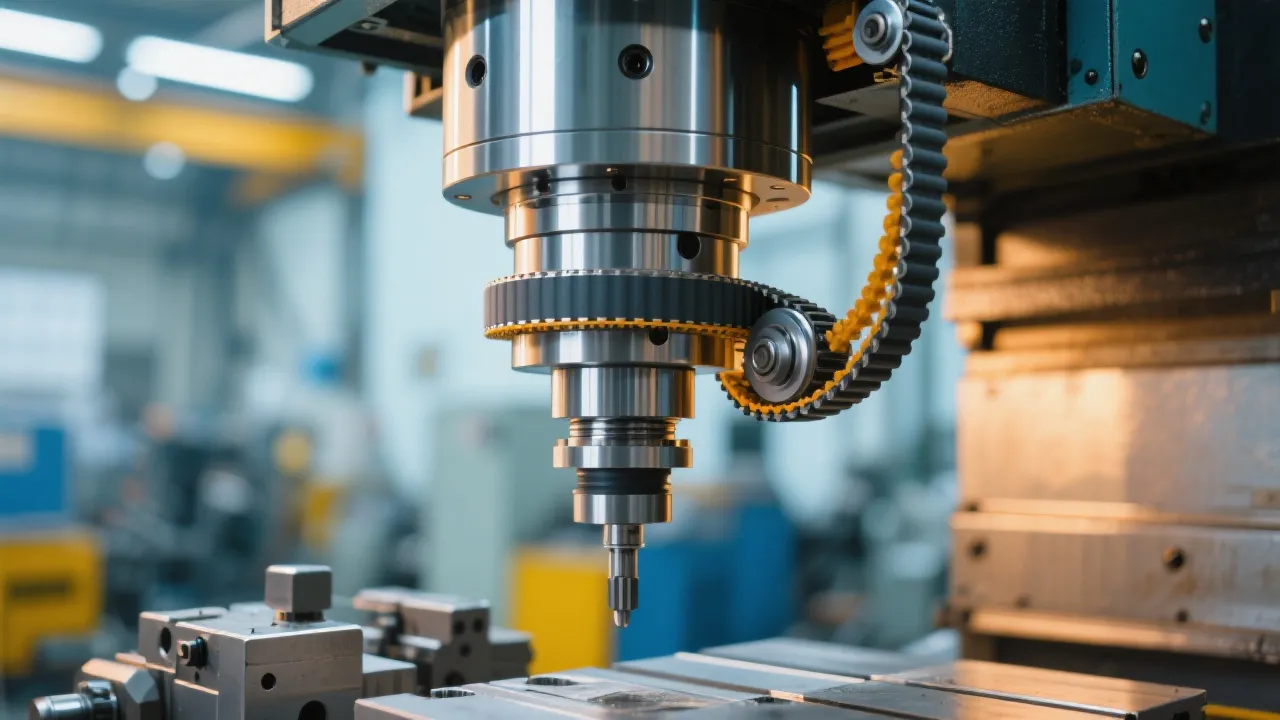
The GJ8070 model stands out for its dual-column rigid structure, which substantially enhances mechanical stiffness and reduces susceptibility to deformation. At the heart of its performance lies its HSK63 high-speed spindle, operating up to 24,000 rpm, which minimizes thermal gradients through optimized cooling circuits and air/oil lubrication systems. Coupled with the Fanuc 31i control unit, the machine ensures ultra-smooth axis interpolation and adaptive feedrate adjustment to counteract vibration onset.
Appropriate selection and tuning of cutting speeds, feed rates, and depth of cut are essential. For example, when milling hardened steel molds (HRC 45-52), a spindle speed of 15,000–20,000 rpm combined with a feed per tooth of 0.02–0.04 mm balances material removal rates and cutting forces. Limiting axial depth of cut to under 2 mm and radial engagement to below 40% can prevent excessive vibration. Sensor-based thermal monitoring integrated into the Fanuc system enables real-time parameter adjustment, maintaining a stable thermal environment.
Utilizing carbide or coated inserts designed for high-speed operations is vital for tool longevity and surface finish. Coatings such as TiAlN or diamond-like carbon (DLC) enhance wear resistance under elevated temperatures. Selecting cutting fluids with rapid cooling and lubrication properties, such as synthetic water-based emulsions enriched with extreme pressure additives, reduces friction and thermal load. Applying minimum quantity lubrication (MQL) techniques further improves chip evacuation while lowering fluid consumption.
Manufacturers demanding sub-micron surface roughness (Ra < 0.2 µm) benefit from automated quality inspection systems integrated with machine controls. Optical and tactile sensors can detect dimensional deviation instantaneously, triggering micro-adjustments in cutting parameters. This closed-loop feedback reduces scrap rates and increases first-pass yield by up to 18% in demanding mold finishing tasks.
A leading automotive mold manufacturer implemented the GJ8070 to machine complex injection molds requiring a tolerance band tighter than ±3 microns. By optimizing spindle speed to 18,000 rpm and combining it with TiAlN-coated micro-end mills, the operation saw vibration amplitude reduced by 35% and surface roughness improved by nearly 30%. These improvements translated to a 22% reduction in overall machining cycle times.