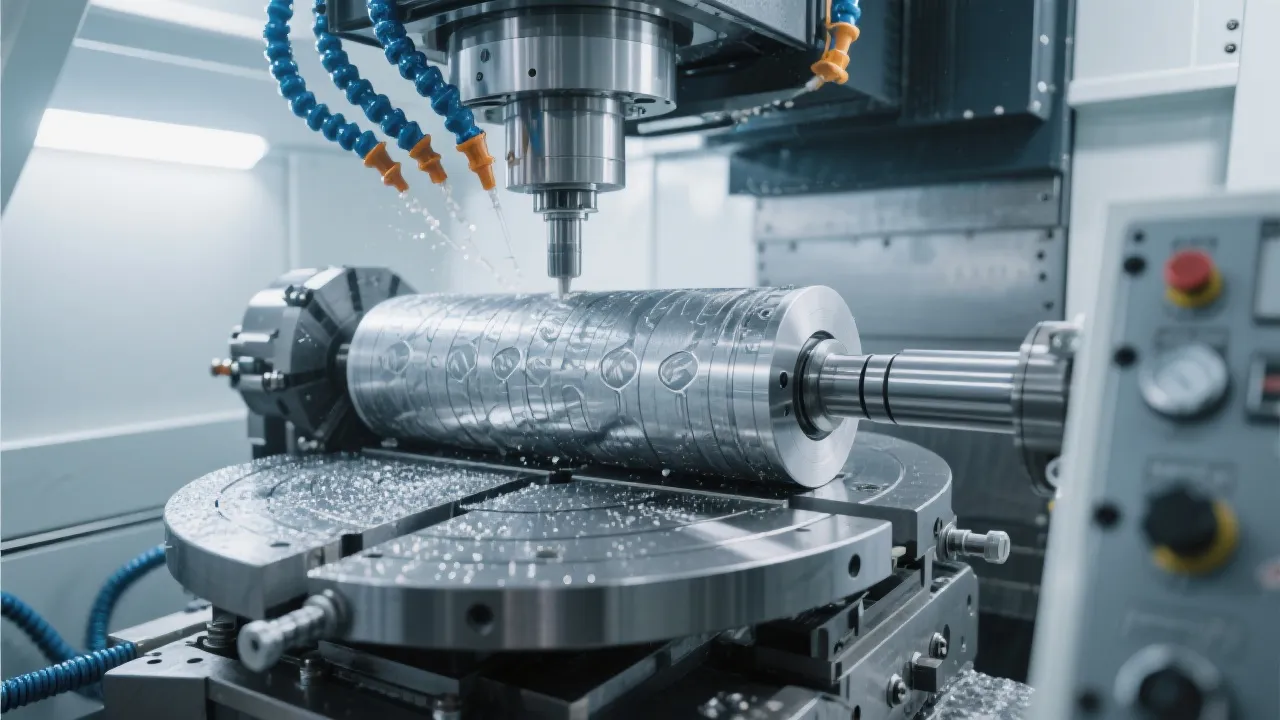
How to Choose Quick Clamping Methods for CNC Machining Centers in Small Batch Production: A Comparison Guide of Mechanical, Pneumatic, and Magnetic Fixtures
20 12,2025
Application Tutorial
In the small batch production environment, the key to the quick clamping technology of CNC machining centers lies in improving processing efficiency and reducing换装 time (这里原文有中文词,推测可能是'retooling time' 换装时间). This article deeply analyzes the application scenarios, advantages, disadvantages, and applicable conditions of mechanical fixtures, pneumatic fixtures, and magnetic fixtures. Combined with practical operation skills, it helps technicians in small and medium - sized manufacturing enterprises choose the most suitable clamping scheme, optimize the processing flow, and improve processing accuracy and product surface quality. The article also shows the impact of different fixtures on production efficiency and processing quality through comparison tables and case studies, helping enterprises achieve flexible manufacturing and efficient production.
A Comparative Guide to Quick Clamping Methods for CNC Machining Centers in Small-Batch Production
In small-batch production environments, the key to quick clamping technology for CNC machining centers lies in improving machining efficiency and reducing tool change time. This article delves into the application scenarios, advantages, and disadvantages, as well as the applicable conditions of mechanical, pneumatic, and magnetic clamps. By combining practical operation skills, it aims to assist technicians in small and medium-sized manufacturing enterprises in selecting the most suitable clamping solutions, optimizing the machining process, and enhancing machining accuracy and product surface quality.
Mechanism and Application Scenarios of Different Clamps
There are three main types of clamps for CNC machining centers in small - batch production: mechanical, pneumatic, and magnetic. Each has its unique working principle and application scenarios.
- Mechanical Clamps: The working principle of mechanical clamps is based on mechanical force transmission, which is usually achieved through screw - nut mechanisms, cam mechanisms, etc. They are widely used in simple - shaped workpieces, such as rectangular or cylindrical parts. For example, in the production of small - batch mechanical parts with a rectangular shape, mechanical clamps can provide about 80% reliable clamping force. The advantages of mechanical clamps are high clamping force and low cost, but the clamping speed is relatively slow, usually taking about 3 - 5 minutes for a single clamping operation, which may affect production efficiency in small - batch production.
- Pneumatic Clamps: Pneumatic clamps use compressed air as the power source to achieve rapid clamping and loosening. They are suitable for workpieces that require high - speed clamping and have relatively high production efficiency. In a small - batch production line, pneumatic clamps can complete the clamping operation in about 1 - 2 minutes. However, they require an additional air supply system, and the cost is relatively high, which is about 30% higher than that of mechanical clamps. They are more suitable for workpieces with medium and regular shapes, such as square and round workpieces.
- Magnetic Clamps: Magnetic clamps use magnetic force to clamp workpieces, which are mainly used for ferromagnetic materials. They can quickly clamp workpieces without complex fixtures, and the clamping time can be controlled within 1 minute. The advantage of magnetic clamps is that they can effectively prevent workpiece deformation, but they have limitations in clamping non - ferromagnetic materials. For example, in the production of small - batch iron parts, magnetic clamps can improve the surface quality of the workpiece by about 20%.
Comparison of Different Clamps
| Clamp Type |
Clamping Force |
Clamping Speed |
Cost |
Workpiece Deformation |
Applicable Workpiece Shape |
| Mechanical |
High |
Slow |
Low |
Medium |
Simple |
| Pneumatic |
Medium |
Fast |
High |
Low |
Medium - regular |
| Magnetic |
Medium |
Very fast |
Medium |
Very low |
Ferromagnetic materials |
Case Analysis
A small - batch production enterprise was producing a series of small - sized iron parts. At first, they used mechanical clamps, and the production efficiency was relatively low. The average production time for each part was about 10 minutes. After switching to magnetic clamps, the production time was reduced to 6 minutes, and the surface quality of the parts was significantly improved. The surface roughness decreased from Ra 3.2μm to Ra 2.5μm, which is a clear evidence of the different impacts of different clamps on production efficiency and product quality.
In conclusion, choosing the right clamping method for CNC machining centers in small - batch production is crucial for improving production efficiency and product quality. If you are interested in more efficient quick - clamping solutions, click to learn about the various quick - clamping solutions of GJ8070 High - Speed CNC Milling Machine from Ningbo Kaibo CNC Machinery Co., Ltd.






 <#else>