Effective Clamping Force Control for Thin-Walled Parts: Key Techniques to Prevent Deformation and Enhance Machining Accuracy
11 01,2026
Application Tips
This article explores how to effectively control the clamping force of thin-walled parts in low-volume production to prevent deformation and improve machining accuracy. It highlights the application of various quick clamping technologies in CNC machining centers, including mechanical, pneumatic, and magnetic clamps. Practical tips for reducing clamping errors and minimizing deformation are shared, with a focus on optimizing processes and enhancing quality. The content is tailored for technical managers and machining engineers aiming to boost production efficiency and product consistency while meeting diverse manufacturing demands.
Effective Clamping Force Control for Thin-Walled Components: Key Practical Techniques to Prevent Deformation and Enhance Machining Precision
Thin-walled parts present unique challenges in the manufacturing landscape, especially under small-batch production settings where agility and quality must coexist. Improper control of the clamping force during machining is a leading cause of part deformation, compromising precision and surface quality. This article delves into the critical relationship between clamping force and machining accuracy in thin-walled components processed on CNC machining centers, emphasizing practical solutions with various rapid fixturing technologies.
Understanding Clamping Force and Its Impact on Thin-Walled Part Deformation
Clamping force refers to the mechanical pressure applied to secure a workpiece during machining. While sufficient clamping is essential to prevent movement and vibrations, excessive force can induce elastic or plastic deformation in thin-walled parts. For instance, studies show that over-application of clamping force can cause dimensional deviations exceeding 0.1 mm on walls thinner than 2 mm, significantly degrading product quality.
Precise control over clamping force is thus vital to balance firmness and part integrity. This requires a nuanced understanding of material properties, wall thickness, and machining dynamics.
Rapid Clamping Technologies in CNC Machining Centers
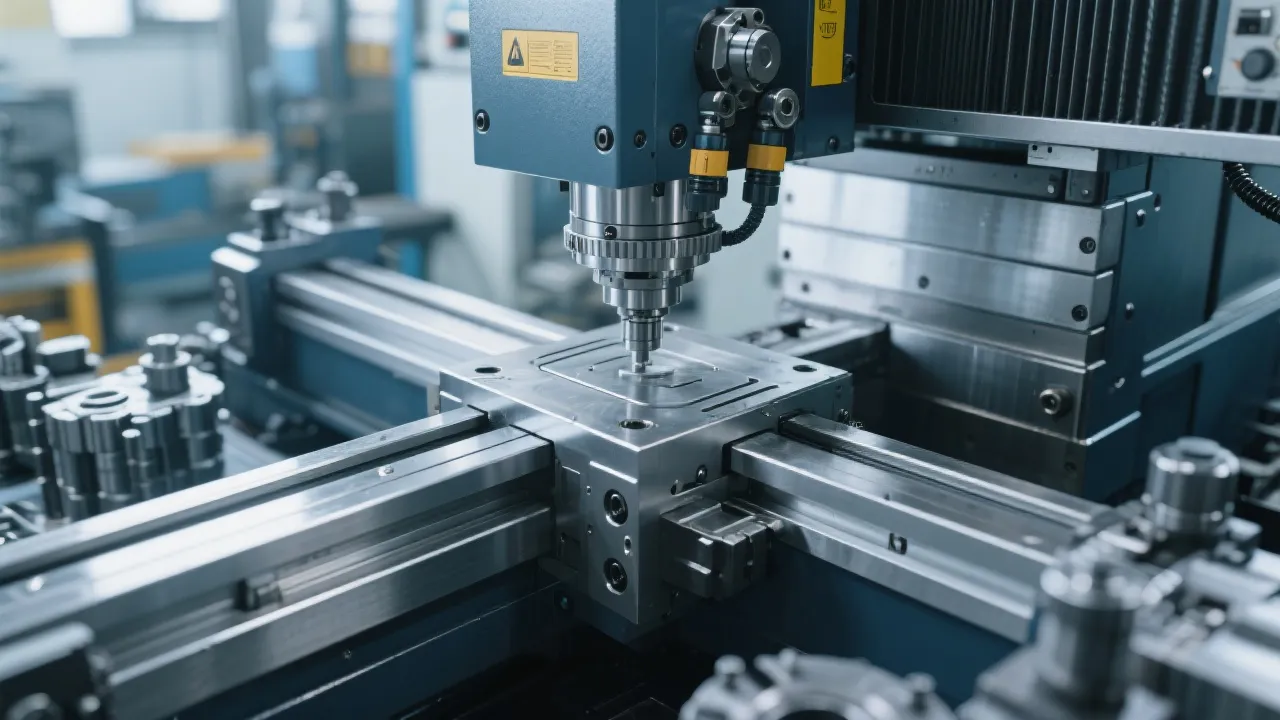
Leveraging advanced clamping systems can enhance process efficiency without compromising accuracy. The main rapid clamping solutions applied in CNC machining centers for thin-walled parts include:
- Mechanical Clamps: Traditional mechanical clamps offer robust holding but require careful force tuning. Precision tension springs and adjustable jaws can help control applied pressure with repeatability up to ±5 N.
- Pneumatic Clamps: Utilizing compressed air, pneumatic clamps enable fast, consistent clamping force application, typically controllable from 20 N to 200 N. This adjustability suits varied wall thicknesses, improving throughput with minimal operator intervention.
- Magnetic Clamps: Ideal for ferromagnetic thin parts, magnetic clamps apply uniform holding force without inducing localized stress points. Holding forces up to 1500 N per clamp are achievable, reducing surface distortion risks.
Comparative Analysis: Choosing the Optimal Clamping Method
| Clamping Type |
Force Control Precision |
Setup Speed |
Suitability for Thin Walls |
Typical Application |
| Mechanical |
Medium (±5 N) |
Medium |
Moderate |
General machining with thicker thin-walls |
| Pneumatic |
High (±2 N) |
Fast |
High |
Small batch, flexible setups |
| Magnetic |
Very High (uniform field) |
Fast |
Excellent for ferromagnetic thin parts |
Precision aerospace components, electronics housing |
Practical Techniques to Minimize Clamping-Induced Deformation
Beyond choosing the right clamping technology, certain operational best practices dramatically reduce deformation risks:
- Incremental Clamping Force Application: Gradually increase clamping force while monitoring part response, preventing sudden stress spikes.
- Use of Soft Jaws or Protective Pads: Implement compliant materials at contact points to distribute force more evenly.
- Optimized Fixture Design: Design fixtures that support the part on larger surface areas to reduce localized pressure.
- Force Feedback Systems: Employ sensors on clamps to verify applied force in real-time, enabling on-the-fly adjustments.
- Multiple Fixture Points: Utilize several lower-force clamps distributed strategically rather than a few high-force points.
Case Study: Reducing Deformation in Thin-Walled Aluminum Housings
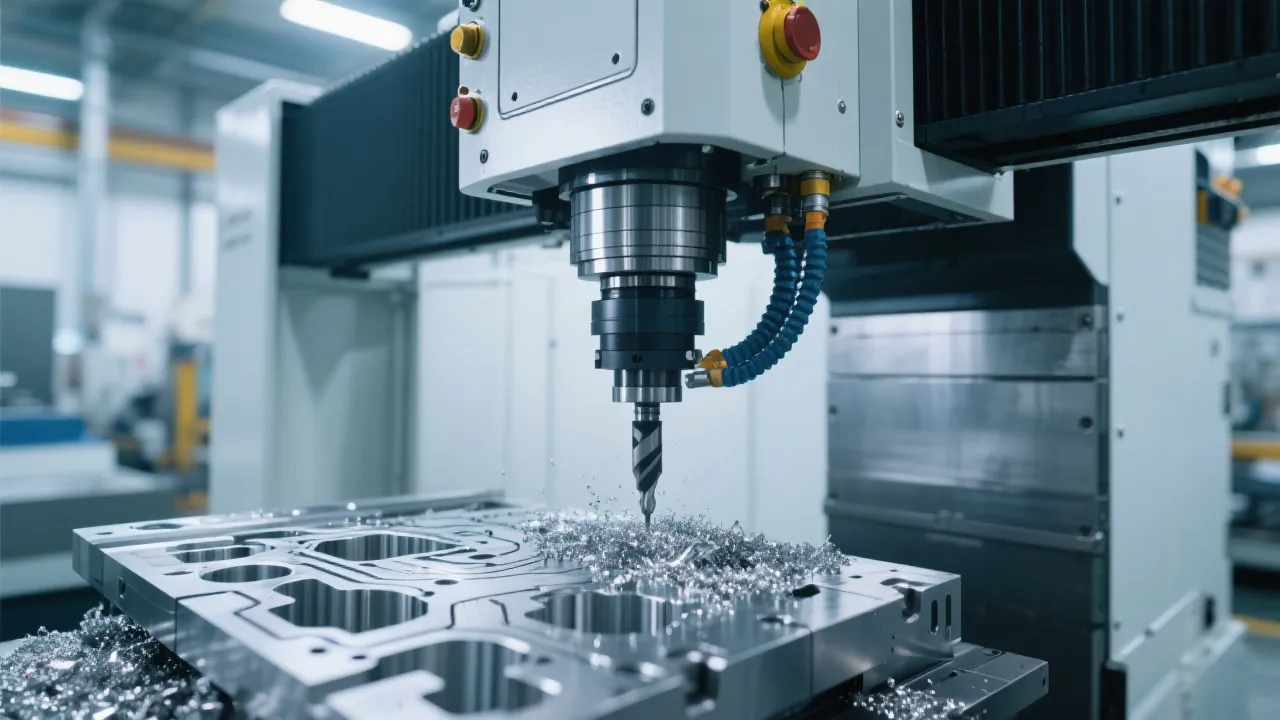
A mid-sized aerospace component manufacturer faced a 15% rejection rate due to thin-walled aluminum housing distortions. By shifting from traditional mechanical clamping to pneumatic clamps with force feedback, they achieved:
- Reduction of dimensional deviation from 0.12 mm to 0.04 mm
- 30% decrease in setup time per part
- Improved surface finish consistency, raising first-pass yield by 18%
This demonstrates the measurable impact of combining rapid clamping technologies with informed operational techniques.
Industry Standards and Terminology
Terms such as “clamping force” (measured in Newtons, N), “machining deformation” (dimensional variance post-clamping), and “fixture repeatability” are standardized in ISO 5459 (Geometrical Product Specifications – Datums and datum systems) and ISO 2768 (General tolerances). Adhering to these standards ensures that clamping techniques meet international quality and repeatability requirements.