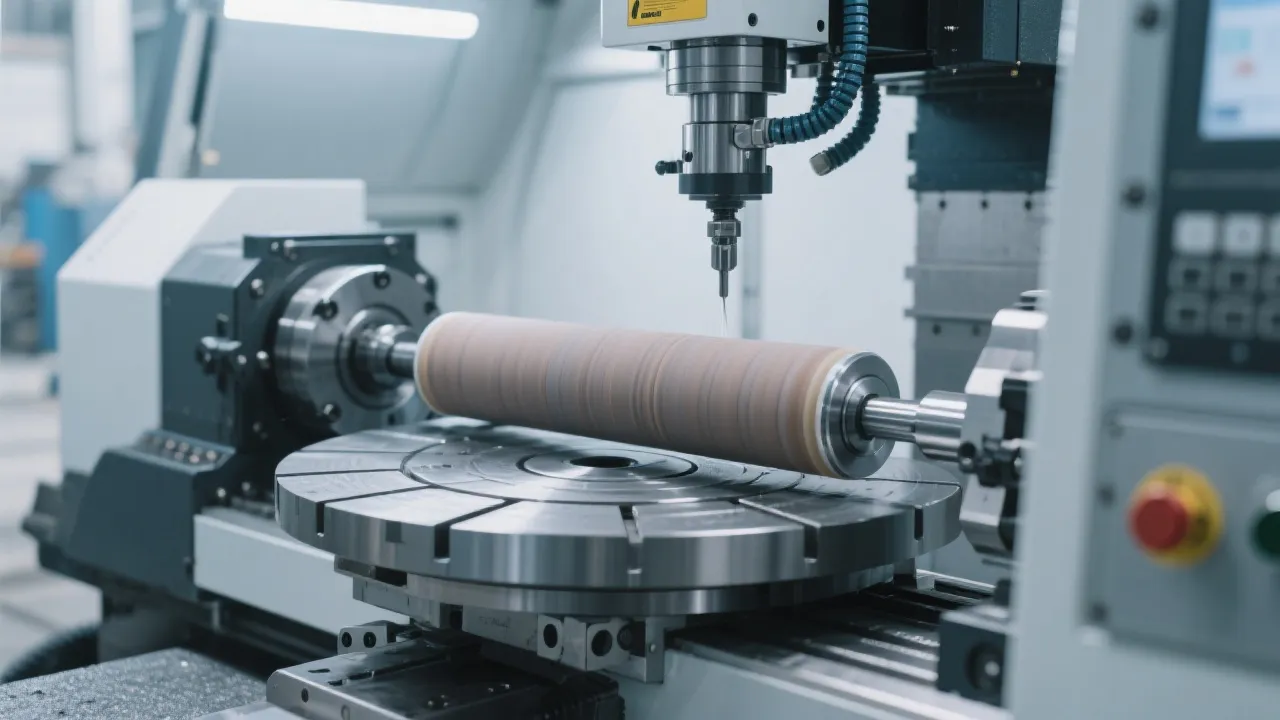
Optimizing Toolpath Strategies to Enhance Surface Roughness in Large Die Machining Using Twin-Column CNC Machines

03 12,2025
KAIBO CNC
Application Tips
This article explores the critical impact of toolpath planning on surface roughness in the machining of large automotive part dies, with a particular focus on the twin-column DC1317 CNC machine developed by Ningbo Kaibo CNC Machinery Co., Ltd. It systematically analyzes five essential technological approaches: fixture rigidity design, cutting parameters optimization, thermal deformation management, toolpath planning, and machine geometry compensation. Combining practical experience and representative case studies, the paper provides mold manufacturers with effective solutions to mitigate dimensional deviations and surface roughness fluctuations. Supported by empirical data and visual illustrations, this study offers actionable strategies to improve machining accuracy, consistency, and yield rates in automotive die production.
营销主题配图_1752129350778.jpg

Optimizing Toolpath Planning to Enhance Surface Roughness in Large Automotive Molds Using Dual-Column CNC Machines

Achieving superior surface quality on large automotive molds remains a significant challenge in modern manufacturing. The interplay between toolpath planning and surface roughness critically influences the dimensional accuracy and functional performance of these components. Leveraging the dual-column CNC milling machine DC1317 from Ningbo Kaibo CNC Machinery Co., Ltd., manufacturers can significantly improve machining precision and consistency through strategic optimization of process parameters and tooling strategies.

Key Factors Affecting Surface Roughness in Large Mold Machining

Surface roughness in large molds is primarily influenced by multiple interdependent variables—mechanical rigidity, cutting parameters, thermal stability, toolpath dynamics, and machine geometry compensation. A scientific approach that addresses these factors holistically can reduce surface irregularities, thereby improving the mold's functional lifespan and fitting accuracy.

Process Factor Impact on Surface Quality Optimization Strategy
Fixture Rigidity Minimizes vibration, prevents deformation Design robust dual-clamp systems to enhance rigidity
Cutting Parameters Influences chip load and surface finish Adjust feed rate, spindle speed, and depth of cut based on material and tool
Thermal Deformation Control Reduces dimensional errors caused by heat expansion Implement active cooling and compensate thermal drift
Toolpath Planning Determines material removal and surface uniformity Optimize path sequencing, step-over, and direction to minimize scallop height
Machine Geometry Compensation Offsets any mechanical misalignment and wear Regularly calibrate and apply real-time geometric error compensation

Dual-Column Machine Structure: The Rigidity Advantage

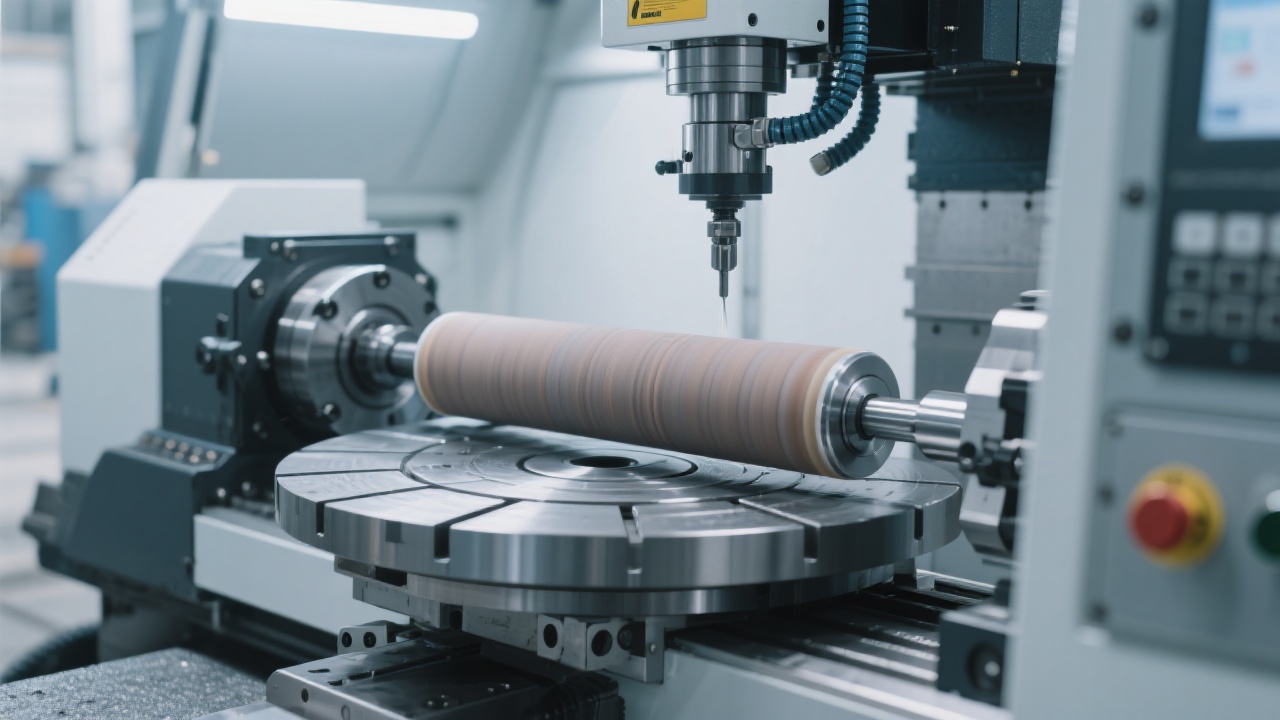
The DC1317 dual-column CNC milling machine delivers exceptional structural stability, crucial for processing large molds with high precision. Its symmetrically supported columns minimize deflection during heavy cuts, reducing vibration-induced surface imperfections. Experimental data from Ningbo Kaibo CNC Machinery demonstrate a 25% improvement in surface roughness (from Ra 1.6 µm to Ra 1.2 µm) when using the dual-column system versus conventional single-column setups.

Practical Toolpath Optimization Techniques

To maximize surface finish quality, adopting advanced toolpath strategies is essential:
  • Adaptive Machining Paths: Dynamically adjust feed rates and step-over based on real-time cutting forces.
  • High-Overlap Contouring: Use minimal step-over increments (0.1–0.2 mm) to reduce scallop heights between passes.
  • Helical Tool Engagement: Smooth entry and exit cuts to avoid marks and sudden load changes.
  • Climb Milling Preference: Decrease tool deflection and improve the surface quality by consistent chip thickness.
Diagram illustrating dual-column CNC machine structure enhancing rigidity for large mold machining

Data-Driven Results and Case Application

In a practical application involving a large automotive door mold, the integration of optimized toolpath planning on DC1317 yielded:
  • Surface roughness improvement from Ra 1.8 µm to Ra 1.1 µm—representing a 39% reduction of surface irregularities
  • Dimensional accuracy tightened by 15% through concurrent thermal compensation and geometric calibration
  • Cycle time reduction by 12% achieved via adaptive feed rate modulation without compromising quality
Comparative graph of surface roughness before and after optimized toolpath planning on automotive mold

Engineering Expertise & Interactive Knowledge Exchange

Understanding that continuous improvement thrives on shared expertise, Ningbo Kaibo CNC Machinery actively promotes an interactive Q&A platform where engineers can exchange insights about dual-column CNC machining, toolpath optimization, and troubleshooting thermal deformation effects in large mold manufacturing.
Screenshot of engineering Q&A forum supporting dual-column CNC machine applications
Name *
Email *
Message*

Recommended Products

<#if (articleDetails.articleDetailsRelatedArticles.articleList?has_content)?? && (articleDetails.articleDetailsRelatedArticles.articleList?size>0)> <#if (articleDetails.articleDetailsRelatedArticles.isShow)?? && articleDetails.articleDetailsRelatedArticles.isShow> <#if (articleDetails.articleDetailsRelatedArticles.title)?? && articleDetails.articleDetailsRelatedArticles.title!="">

${articleDetails.articleDetailsRelatedArticles.title}

<#list articleDetails.articleDetailsRelatedArticles.articleList as list>
<#if (list.imgUrl?has_content)?? && (list.imgUrl?has_content)> ${list.imgAlt} <#else> img

${list.title}

${(list.updateTime)?number_to_datetime?string('dd MM ,yyyy')}
Contact us
Contact us
https://shmuker.oss-cn-hangzhou.aliyuncs.com/tmp/temporary/60ec5bd7f8d5a86c84ef79f2/60ec5bdcf8d5a86c84ef7a9a/thumb-prev.png

